The same fight, since 1892.
By now you know what the job is and how to get it. Before you go and do it, you need some situational awareness about what is happening in Idaho today, and you need to spend some time with our history. You know the old adage: “Those who cannot remember the past are condemned to repeat it.” We don't want to repeat past failures, and we don't want you flying blind.
For years, the people elected to govern Idaho as Republicans have changed once they got into office and governed like Democrats. The Party, which is supposed to hold these officials to account, has been filled with people who do not want to exercise that power. And when Idahoans took one county committee back, the establishment answered with money, a radio campaign and the word “extremist.” The mine owners did the same thing to the Coeur d'Alene unions in 1892, and that story is at the end of this chapter.
A Republican governor who governs like a Democrat.
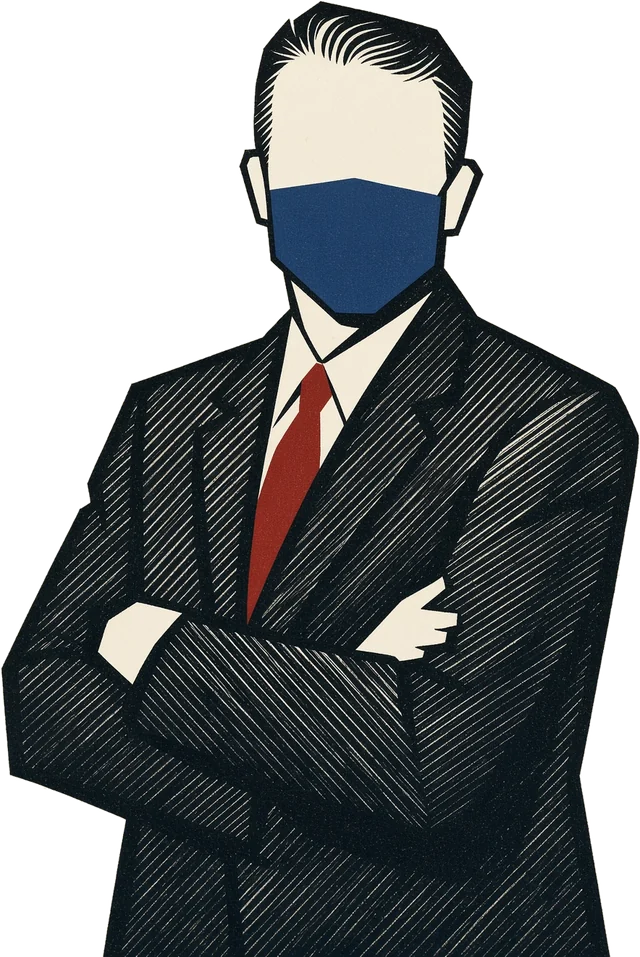
Brad Little has been elected governor three times as a Republican, most recently in November 2026 with 57% of the vote.1 This is his record on the things that decide whether Idaho stays Idaho.
In March 2020 he ordered every Idahoan to stay home and closed every business he decided was not essential. He did it by proclamation, with the Legislature out of session, and the order ran for thirty-six days.2 Governors of Idaho had suspended ordinary life by proclamation before, in 1892 and in 1899, and that history starts at the end of this chapter.
In 2023 the Legislature passed the Children's School and Library Protection Act, which let parents sue a school or public library that handed obscene material to a minor. The governor vetoed it, and the override failed by one vote. That summer the Idaho Republican State Central Committee voted no confidence in Brad Little and in the fourteen “Republicans” who sustained his veto.3
In 2025 the Legislature barred unofficial flags from government buildings. The Mayor of Boise, Lauren McLean, answered by declaring the Pride flag an official city flag, and it kept flying over City Hall for a year while the governor's office did nothing. The flag came down only after the Legislature came back in 2026 and attached a fine of $2,000 a day, and the city lit the building in trans colors that same night.4
St. Luke's, the state's largest hospital system, ran a children's clinic in Boise that advertised puberty blockers, cross-sex hormones and surgery for minors.5 The Legislature banned those procedures for minors in 2023. The governor signed the bill late on a Tuesday night that April, and he attached a letter warning lawmakers to “take great caution” before letting government “interfere with loving parents.”6
In 2026 an initiative to legalize abortion up to viability reached the November ballot with more than 110,000 signatures, and its opponents said it was being paid for by out-of-state billionaires.7 The state Party campaigned against it,8 and on November 3 it lost, 56% to 44%. The governor, who was on the same ballot, spent the fall avoiding debates. At the League of Women Voters forum in Boise his chair sat empty.9
Thousands of the people reading this came to Idaho from California, Washington and Oregon after 2020, and they did not move for the weather. They left behind shuttered churches, Antifa in the streets, schools that lied to them about their own children, and a political class that called them the problem. They arrived in a state that advertises itself as one of the reddest in the country and found a “conservative” governor who sits out the fights that matter most to them.
Why he is still there.
A governor gets replaced when a party recruits a challenger, vets him, funds him and turns out the vote for him, county by county. In Idaho that party is built from 981 precinct seats, and for most of the last twenty years those seats have been held by people who had no intention of doing any of that.
Most of those seats were never taken from anyone. In May 2026, 70% of them were won without an opponent or left with no candidate at all, and Chapter II has the arithmetic. The establishment never had to capture the Party, because it was usually the only one in the room. The people in the room call themselves moderates. Some belong to the old boys' club of lobbyists and retired officeholders who like the Party as a dinner society. Some are not Republicans at all. Since Idaho closed its Republican primary in 2012, left-leaning voters have re-registered as Republicans to vote for the weaker candidate, a practice the Idaho Tribune documented in 2022. In 2026, about thirty percent of the 110,000 Idahoans who signed the abortion initiative petition were registered Republicans, and two of them were sitting precinct committeemen in Kootenai County.10
A Party run that way was never going to hold a Republican governor to the Platform, and it has not.
Four campaigns that failed.
In two election cycles Brad Little has been challenged twice in the Republican primary and twice by an independent in November. None of those campaigns came through the Party, and all four failed.
2022. Lieutenant Governor Janice McGeachin ran against him in the primary with Donald Trump's endorsement and lost, 148,831 to 90,854, with Ed Humphreys and five other candidates taking another 42,000 votes. Ammon Bundy pulled out of that primary in February and ran as an independent in November. He drew 101,835 votes, 17% of the total, which was the best showing by a candidate outside the two major parties since 1926, and he finished ahead of the Democrat in 34 of the 44 counties. Little still won with 60%.11
2026. Trump endorsed Little a year before the primary, and by spring Little had raised nearly $2 million. In May David Leroy, a former attorney general and lieutenant governor, told Idaho Education News that the right did not have “a candidate of stature” to run against him.12 The candidate who did step forward was Mark Fitzpatrick, a former police officer who owns the Old State Saloon. He had raised less than $200,000 by the end of March, and he took 28.7% of the primary, 68,546 votes to Little's 140,778, with six other candidates splitting another 30,000.13 In November the Democrat, Terri Pickens, got 32%. John Stegner, a former justice of the Idaho Supreme Court, ran as an independent, raised more than half a million dollars, and got less than 8%.
In those two primaries more than 230,000 votes went to somebody other than the sitting governor of the voters' own party, and in between another 100,000 Idahoans voted for an independent over him. Those campaigns had plenty of voters and none of the things a party is supposed to provide. A challenger who starts in January has no roster of volunteers, nobody to vouch for him, no endorsement, no county committees walking precincts, and no way to tell a quarter of a million primary voters which candidate holds to the Platform. The incumbent gets all of that by default as long as the committees are in friendly hands. Chapter VIII explains the remedy, which is a committee that rates and vets every candidate before the primary and mails the result to every Republican household.
North Idaho: what happens when you win.
Kootenai County proves that the seats can be taken, and it also shows what comes afterward. Under Chairman Brent Regan, the Kootenai County Republican Central Committee (KCRCC) did what this website describes. It filled its precincts and wrote Rating and Vetting into its bylaws. It put every candidate through a written questionnaire and an interview, voted by secret ballot, and mailed the results to every Republican household. It endorsed in school board, library and college trustee races that the establishment had always treated as its private property. In the May 2022 primary, all 25 of the candidates it recommended finished first in Kootenai County.
The establishment struck back. A former lieutenant governor, Jack Riggs, and a former committeewoman, Christa Hazel, founded a political action committee called North Idaho Republicans.14 Its radio ads called the KCRCC “a breeding ground for extremism,” and, as Regan wrote at the time, its allies in the press called the committee's members white nationalists and domestic terrorists.15 The Kootenai Freedom Caucus, the grassroots bloc on the committee, published a list of who was behind the effort: a Women for Biden organizer, a former Pride Alliance board member, a retired lobbyist for Pfizer and Monsanto, and Never Trumpers running as Republicans.16
In May 2024 North Idaho Republicans ran candidates for nearly all 73 precinct seats, 29 of them former elected officials, and won 30, up from two.17 In May 2026 they came back and took 33 of 74. The Freedom Caucus held 37, four independents held the balance, and Brent Regan lost his own precinct by fourteen votes, 286 to 272, though he is still listed as chairman of Region II.18 Nine days later the committee elected Ron Jacobson, a retired banker and former mayor of Post Falls, as its chairman, 63 to 9, on a promise to stop the infighting.19 Whether Rating and Vetting survives that promise is something the next two years will show.
38 of 74 seats is a majority.
Sources: Spokesman-Review, May 22, 2024 and May 20, 2026. “Grassroots” is the KCRCC slate in 2024 and the Kootenai Freedom Caucus slate in 2026; 2022 is the starting point North Idaho Republicans described, two seats.
North Idaho Republicans spent three years, two election cycles, a radio campaign and 29 former officeholders on seats that are won with a couple hundred votes apiece. The establishment understands the precinct strategy as well as anyone does, and it is using that strategy against the grassroots.
1892: the same fight, the same playbook.
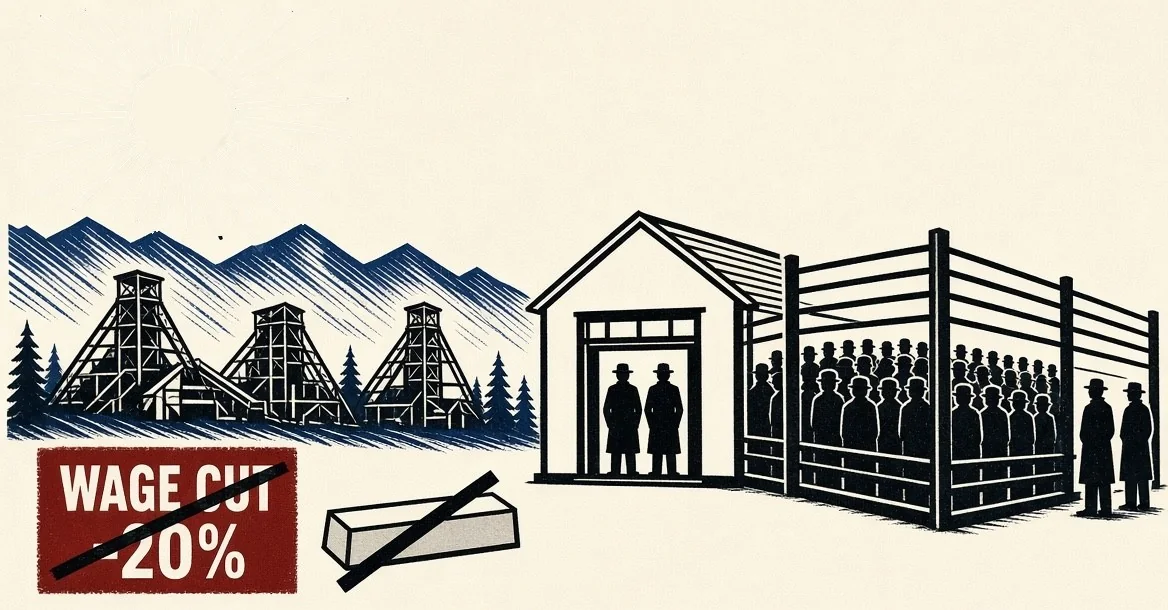

Idaho was two years old. The silver mines of the Coeur d'Alenes were the richest in the country, and the men who worked them had organized, camp by camp, into miners' unions at Wardner, Gem, Burke and Mullan. The men who ran those unions were Irish and Catholic. Edward Boyce of the Wardner union was born in County Donegal, came to the district in 1888, and served as that union's corresponding secretary.20 In 1892 the owners, organized as the Mine Owners' Association, cut the underground wage by fifty cents a day and added an hour to the shift. The miners struck for $3.50 a day for every man underground, skilled or not.21 A year earlier, in Rerum Novarum, Pope Leo XIII had written that a workingman is owed a wage that can support a family and has the right to organize to get it. The Coeur d'Alene unions asked for nothing more than that.22
The owners did three things. They shipped in replacement workers from Michigan, using job advertisements that never mentioned a strike. They hired the Pinkerton and Thiel detective agencies to infiltrate the unions and brand the members as anarchists. And when shooting broke out at the Frisco mill on July 11, they got the governor, Norman Willey, to declare martial law, bring in federal troops, and lock about six hundred miners in bullpens without charges or hearings. Boyce was arrested with them and served six months in the Ada County jail for contempt of court. He came out blacklisted.23 Eighteen union leaders were convicted, and the following year the U.S. Supreme Court reversed the conspiracy convictions of George Pettibone and his co-defendants.24
The Pinkerton inside the Gem union was Charlie Siringo. Under the name Charles Leon Allison he shoveled ore, joined the union and got himself elected recording secretary, so that every plan the miners made reached the mine owners within the week. Twenty-three years later he wrote a book called Two Evil Isms: Pinkertonism and Anarchism, in which he described what the agency did. It paid provocateurs, it framed defendants, and in Colorado it gave written instructions to rig a governor's re-election. The Pinkertons had him charged with criminal libel and got a court to impound the plates and every unsold copy.25
Here are the two stories side by side.
| 1892 | Today |
|---|---|
| The Mine Owners' Association | The donor class, and the lobby that works for it |
| Cut wages, lengthen the shift, import labor from Michigan | Hold wages down with imported visa labor while Idahoans are priced out of their own towns |
| Pinkerton and Thiel detectives inside the union hall | Crossover voters inside the Party, and a press that repeats what they say |
| “Anarchists,” “Molly Maguires” | “Extremists,” “white nationalists,” “domestic terrorists” |
| Martial law by proclamation, and a bullpen | A stay-home order by proclamation, and a fine |
| A governor who did what the owners asked | A governor who does what the donors ask |
| Miners who built a union, camp by camp | You |
The names are different now, but the method is the same. Men who profit from cheap labor and a quiet population have always been able to find a detective agency, a newspaper and a governor willing to call ordinary people dangerous for organizing. The miners answered the bullpen the following spring by building a federation of every mining camp in the West. Boyce went to the Legislature in 1894 as a Populist, and after that he became the federation's president.26 What became of him and of the federation is the second half of this story. It is told in Chapter XI, because it carries the warning that this whole website is built on.
What this chapter is for.
You were probably angry before you got here, so the point of this chapter is to aim that anger at the right target. The governor is where he is because the Party's precinct seats are held by people who want him just as he is, or by nobody at all. North Idaho shows that taking the seats works, and it shows how much work it takes to keep them. The miners of 1892 show what happens to a people who lose the institutions they built, which is that somebody else picks up the pieces, and he may not share their Faith.
The other side has shown what it is willing to do. Our answer is rightly ordered action, which means that we organize, vet, vote and take the seats, and we let the people who reach for the rifle explain themselves to a jury. It takes about 154 votes to win a seat, and your grandchildren will live in whichever Idaho the people who fill those seats decide to build.
- Boise State Public Radio, Idaho November 2026 midterm election results: Little 57%, Pickens 32%, Stegner under 8%; Proposition 1 failed with about 56% opposed. Unofficial until the state canvass. ↑
- World Population Review, lockdown by state: Idaho statewide stay-at-home order, March 25 to April 30, 2020. ↑
- Resolution 2023-43, Vote of No Confidence in Governor Brad Little and fourteen Representatives, adopted by the Idaho Republican State Central Committee, June 24, 2023. ↑
- Spokesman-Review, “Boise vows to take a stand against laws targeting Pride flags, trans people,” April 1, 2026. ↑
- Idaho Dispatch, “Hospital in Boise Offers ‘Gender Reassignment’ Surgery,” September 7, 2022. ↑
- KIVI, “Gov. Little signs House Bill 71, banning gender-affirming care for minors in Idaho,” April 5, 2023. ↑
- Spokesman-Review, “Abortion initiative fails in Idaho,” November 4, 2026. ↑
- Republican Party of Idaho, “The Truth About the Radical Abortion Initiative”. ↑
- Kevin Richert, Idaho Education News, “The governor’s race: Little lays low, while two opponents look for a breakthrough,” October 8, 2026. ↑
- Bonner County Daily Bee, “KCRCC addresses investigation into Prop 1 signers,” September 29, 2026. ↑
- “2022 Idaho gubernatorial election,” Wikipedia, from the Secretary of State’s certified canvass. ↑
- Kevin Richert, Idaho Education News, “Analysis: GOP politics and Little have changed since 2018. This election proves it,” May 7, 2026. ↑
- “2026 Idaho gubernatorial election,” Wikipedia; Idaho Secretary of State, May 19, 2026 primary results. ↑
- Spokesman-Review, “Traditional Republicans flood May ballot for control of Kootenai County GOP,” May 12, 2024. ↑
- Brent Regan, Idaho Tribune, “Ad Hominem Ad Nauseam,” July 21, 2023. ↑
- Kootenai Freedom Caucus, “Who Is Attacking Us”. ↑
- Spokesman-Review, “Traditional Republicans fail to win majority of seats needed to control Kootenai County Republican Central Committee,” May 22, 2024. ↑
- Spokesman-Review, “Kootenai County GOP chairman Brent Regan loses precinct committee race,” May 20, 2026. ↑
- Spokane Public Radio, “Kootenai County GOP elects former Post Falls mayor as chair in effort to halt infighting,” May 29, 2026. ↑
- “Ed Boyce,” Wikipedia: born November 8, 1862, County Donegal; joined the Wardner Miners’ Union in 1888 and served as corresponding secretary. ↑
- “1892 Coeur d’Alene labor strike,” Wikipedia, and William J. Gaboury, Dissension in the Rockies: A History of Idaho Populism (1988). ↑
- Leo XIII, Rerum Novarum, May 15, 1891, paragraphs 45 and 49–57. ↑
- “Ed Boyce,” Wikipedia: arrested for violating the federal injunction, six months in the Ada County Jail for contempt, released 1893 and blacklisted. ↑
- Pettibone v. United States, 148 U.S. 197 (1893). ↑
- “Charlie Siringo,” Wikipedia; Charles A. Siringo, Two Evil Isms: Pinkertonism and Anarchism (1915). ↑
- “Ed Boyce,” Wikipedia: elected to the Idaho Senate from Shoshone County as a Populist in 1894; president of the Western Federation of Miners, 1896–1902. ↑